 English
  Español
  عربى
عربى We are located in Haining City, Zhejiang Province, one of China's famous knitting industrial Bases.
Content
- 1 What Makes Activewear Fabric Different from Everyday Textiles
- 2 Core Fiber Types Used in Activewear and Yoga Fabric
- 3 Key Performance Properties of Activewear and Yoga Fabric
- 4 Yoga Fabric: Specific Requirements for Practice and Studio Use
- 5 Common Activewear Fabric Constructions and Their Applications
- 6 Fabric Finishing Technologies That Enhance Activewear Performance
- 7 Comparing the Most Popular Activewear and Yoga Fabric Blends
- 8 Washing and Care Instructions to Preserve Activewear and Yoga Fabric Performance
What Makes Activewear Fabric Different from Everyday Textiles
Activewear fabric is a category of performance textile engineered specifically to support the human body during physical movement — stretching, compressing, wicking, and recovering in ways that ordinary clothing fabrics cannot. Unlike standard woven or knit fabrics used in casual clothing, activewear fabrics are developed through a combination of fiber selection, yarn construction, knitting architecture, and finishing chemistry that collectively produce a textile capable of moving with the body, managing sweat, resisting odor, and returning to its original shape after repeated cycles of intense physical stress. The performance requirements of activewear fabric are substantially more demanding than those of everyday clothing, and understanding how these requirements are met at the material level is essential knowledge for anyone designing, manufacturing, or selecting activewear garments.
The activewear fabric market has expanded dramatically over the past two decades, driven by the global growth of fitness culture, the mainstreaming of athleisure as a fashion category, and advances in fiber and textile technology that have made high-performance fabrics accessible at consumer price points. Today's activewear fabrics range from ultra-lightweight training fabrics weighing less than 100 g/m² to dense compression fabrics providing targeted muscular support, and from smooth, matte surfaces designed for studio environments to highly textured fabrics engineered for outdoor endurance sports. Each fabric type represents a specific set of performance trade-offs optimized for particular activities and user preferences.
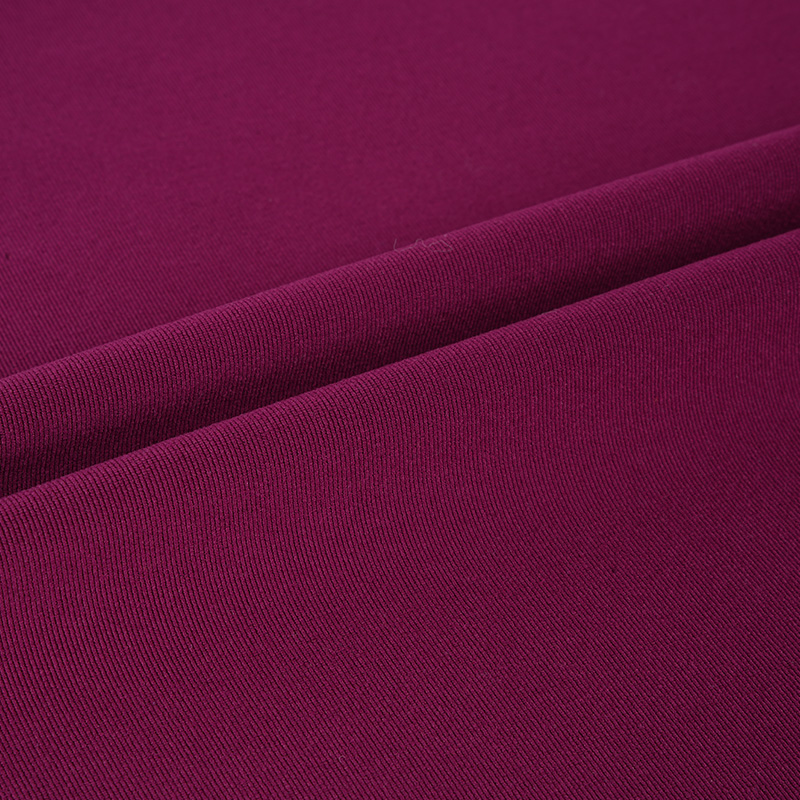
Core Fiber Types Used in Activewear and Yoga Fabric
The performance characteristics of any activewear or yoga fabric are determined first and foremost by the fibers from which it is constructed. Different fiber types contribute different combinations of stretch, recovery, moisture management, softness, durability, and environmental profile to the final textile. Most commercial activewear fabrics are blends of two or more fiber types, combining the strengths of each to overcome the limitations of using any single fiber alone.
Nylon (Polyamide)
Nylon — chemically known as polyamide — is one of the two dominant synthetic fibers in premium activewear fabric production, used extensively in yoga leggings, performance shorts, sports bras, and swimwear. Nylon's defining advantages for activewear applications are its exceptional abrasion resistance (significantly higher than polyester of equivalent denier), its smooth, almost silky hand feel even at fine denier counts, its ability to accept dye with excellent color depth and vibrancy, and its inherent elasticity relative to polyester — nylon fibers have a slightly higher elongation at break and better elastic recovery than polyester, contributing to a more comfortable, body-conforming fit. Nylon 6,6 (produced from hexamethylenediamine and adipic acid) and Nylon 6 (produced from caprolactam) are the two primary commercial variants used in activewear, with Nylon 6,6 offering slightly superior mechanical properties and Nylon 6 offering better dyeability at lower temperatures. The primary limitation of nylon for activewear is its susceptibility to UV degradation with prolonged sun exposure and its tendency to yellow over time in the presence of body oils and perspiration — both manageable through appropriate finishing treatments and care practices.
Polyester
Polyester is the most widely used fiber in the global activewear market due to its combination of low cost, high durability, excellent moisture-wicking capability, and outstanding color retention. Solution-dyed polyester — in which pigment is incorporated into the fiber during extrusion rather than applied as a surface dye — provides exceptional colorfastness that resists fading even after hundreds of wash cycles and prolonged sun exposure, making it the preferred choice for activewear exposed to chlorine, sweat, or UV radiation. Polyester's moisture management properties derive from its hydrophobic (water-repelling) fiber surface — rather than absorbing moisture like cotton does, polyester fibers transport water droplets along the fabric surface through capillary action driven by the fabric's knit structure, moving sweat away from the skin toward the outer surface where it evaporates. Recycled polyester (rPET), produced from post-consumer plastic bottles, has become standard practice for environmentally conscious activewear brands and is functionally equivalent to virgin polyester while offering substantially reduced energy consumption and carbon footprint per kilogram of fiber produced.
Spandex (Elastane / Lycra)
Spandex — marketed under brand names including Lycra (Invista), ROICA (Asahi Kasei), and Creora (Hyosung) — is the critical stretch component in virtually all activewear and yoga fabrics. Spandex is a segmented polyurethane fiber with extraordinary elastic properties: it can be stretched to 500–800% of its original length and will fully recover to its original dimensions when released, losing negligible elasticity even after thousands of stretch-recovery cycles. In activewear fabrics, spandex is incorporated at content levels of 5–30% by weight — higher percentages producing more powerful compression and faster recovery, while lower percentages provide gentle stretch and recovery suitable for light activity and athleisure applications. Spandex is never used alone in a fabric — it is always combined with nylon, polyester, or other fibers that provide the fabric's body, texture, and surface character. The spandex component degrades over time when exposed to chlorine (in swimming pools), excessive heat (from hot machine washing or tumble drying), and body oils, which is why activewear garments require careful washing practices to preserve their stretch and recovery properties over their full service life.
Sustainable and Natural Performance Fibers
Growing consumer and brand interest in sustainable activewear has driven the development and commercial adoption of several plant-based and bio-derived performance fiber options. Tencel Lyocell and Modal — produced from wood pulp through a closed-loop solvent process that recovers and reuses 99% of the processing chemicals — offer a combination of natural softness, excellent moisture absorption (Lyocell absorbs approximately 50% more moisture than cotton), and biodegradability that synthetic fibers cannot provide. These fibers are increasingly used in yoga fabrics and low-intensity activewear where next-to-skin comfort and naturalness are prioritized over maximum moisture-wicking speed. Bamboo-derived viscose offers similar softness and natural antimicrobial properties (derived from the bamboo plant's natural bamboo kun compounds, though these may be partially reduced during fiber processing). Merino wool, while not a synthetic fiber, is used in performance base layers and yoga layers for its natural odor resistance, temperature regulation across a wide range — keeping the wearer warm when cool and cool when warm — and exceptional next-to-skin softness at fine micron counts (17–19.5 microns) that produce no prickling sensation on sensitive skin.
Key Performance Properties of Activewear and Yoga Fabric
Activewear and yoga fabrics must satisfy a set of performance requirements that are significantly more demanding than those applied to conventional clothing fabrics. These requirements can be measured and quantified through standardized textile test methods, providing objective data that designers, manufacturers, and buyers can use to compare fabrics and verify that specifications are met. Understanding what these properties mean in practical terms helps connect the technical specification language of fabric datasheets to the actual experience of wearing and moving in the garment.
Stretch and Recovery (Elasticity)
Stretch percentage and elastic recovery are the most fundamental performance metrics for activewear and yoga fabric, directly determining how freely the garment allows movement and how well it maintains its shape over time. Stretch percentage — measured according to ASTM D2594 or ISO 4309 by applying a defined load to a fabric sample and measuring the resulting elongation — is typically expressed as the percentage extension achieved in both the course (horizontal) and wale (vertical) directions of the knit. Yoga fabrics and compression leggings typically target four-way stretch of 40–80% in both directions under moderate load, ensuring the fabric moves freely with extreme ranges of motion including deep squats, forward folds, and hip openers without restricting movement or creating tension on the skin. Elastic recovery — the percentage of the original elongation recovered after the stretching force is removed — should ideally exceed 90% after multiple stretch cycles; fabrics that recover less than 85% will progressively bag out at the knees, seat, and other areas of repetitive stress during use.
Moisture Wicking and Drying Rate
Moisture management in activewear fabric operates through two distinct but complementary mechanisms: wicking (the lateral transport of moisture along the fabric surface away from the skin) and evaporation (the conversion of liquid moisture to vapor that removes heat from the fabric and surrounding skin). Wicking rate is measured by the Wicking Rate test (AATCC 197) or the Moisture Management Test (AATCC 195), which assess how quickly a standard volume of liquid spreads across the fabric surface and how uniformly it distributes. Drying rate — tested by the Drying Rate test (AATCC 201) — measures how quickly a wetted fabric sample returns to its original dry weight under standardized environmental conditions. Premium polyester and nylon activewear fabrics achieve drying times of 15–40 minutes for a typical moisture load, compared to 90–120 minutes or more for cotton fabrics of similar weight, making a practical difference in comfort during and after exercise.
Opacity and Coverage
Opacity — the degree to which a fabric prevents the wearer's skin and undergarments from being visible through the fabric when stretched or in specific lighting conditions — is one of the most practically important and commercially sensitive properties of yoga leggings and performance tights. Many activewear brands have faced significant criticism and product recalls over opacity failures in which leggings became see-through when the wearer bent forward or squatted, despite appearing opaque on the hanger. Opacity in knit activewear fabrics is determined by the fabric weight (heavier fabrics are generally more opaque), the fiber denier (finer fibers in a given weight area produce a denser structure with fewer air gaps), the knit structure (tighter constructions with smaller loops are more opaque), and the color and finish (darker colors and matte finishes are more opaque than light colors and glossy finishes). Standard test methods for fabric opacity include AATCC 110 (Whiteness of Textiles) and transmittance measurements, but the most reliable quality control approach for activewear is physical stretch testing on a mannequin or live model under bright lighting conditions that simulate real-world use.
Pilling Resistance and Abrasion Durability
Pilling — the formation of small fiber balls on the fabric surface caused by loose fiber ends working their way out of the yarn structure and tangling together through friction during wear — is a common durability failure mode in activewear fabrics, particularly at areas of high friction such as the inner thighs of leggings, underarms of tops, and seat of shorts. Pilling is assessed using the Martindale abrasion tester (ISO 12945-2) or the Random Tumble Pilling tester (ASTM D3512), with results expressed on a 1–5 scale where 5 represents no pilling and 1 represents severe pilling. Quality yoga and activewear fabrics should achieve a minimum rating of 3.5 (slight to moderate pilling) after 1,000–2,000 Martindale cycles at the minimum, with premium fabrics targeting 4.0–5.0 (trace to no pilling). Fabrics with high spandex content or loose knit structures tend to pill more readily than compact, high-twist constructions, and fabric finishing processes including singeing (burning off surface fiber ends with a gas flame) and calendering (pressing the fabric surface with heated rollers) can significantly improve pilling resistance.
Yoga Fabric: Specific Requirements for Practice and Studio Use
Yoga fabric occupies a distinct subcategory within the broader activewear fabric market, with specific performance requirements driven by the unique physical demands of yoga practice. Unlike high-impact sports such as running or HIIT training — where moisture wicking speed and breathability under sustained aerobic effort are the primary performance priorities — yoga requires a fabric that excels in a different combination of properties: extreme stretch and recovery for the deep, sustained static holds and transitions of yoga practice; next-to-skin comfort and softness for extended contact with the mat and with bare skin; adequate opacity through all movement planes including forward folds and inversions; and a body-contouring fit that moves with the practitioner without creating bulk, bunching, or pressure points.
The Importance of Four-Way Stretch in Yoga Legging Fabric
Four-way stretch — the ability of a fabric to extend and recover in both the lengthwise (wale) and crosswise (course) directions simultaneously — is non-negotiable in yoga fabric. Yoga movements require simultaneous stretch in multiple directions: a forward fold with a twist, for example, requires the legging fabric to stretch lengthwise along the back of the leg, crosswise across the hip, and diagonally at the outer hip, all at the same time and without creating tension on any body surface. Two-way stretch fabrics — which extend freely in one direction but not the other — create uncomfortable tightness in the restricted direction during multi-planar yoga movement and are entirely inadequate for yoga leggings or yoga tops. The typical specification for yoga legging fabric is 40–70% stretch in the wale direction and 50–80% stretch in the course direction under a standard test load of 1.47N per 50mm sample width, with elastic recovery exceeding 90% in both directions after 10 cycles of stretch to 50% elongation.
Fabric Weight Selection for Different Yoga Styles
Yoga fabric weight — measured in grams per square meter (g/m²) — should be selected based on the style of yoga practice for which the garment is designed, as different yoga disciplines create different body temperature and moisture management demands. Hot yoga (Bikram, Inferno Hot Pilates) practiced in rooms heated to 35–42°C generates intense perspiration and requires the lightest, most breathable fabrics — typically 140–180 g/m² — with maximum moisture wicking and evaporation performance. Hatha, Vinyasa, and Power yoga practiced at room temperature are best served by mid-weight fabrics of 180–230 g/m² that provide sufficient coverage and body-shaping effect without excessive warmth. Yin yoga, restorative yoga, and prenatal yoga — practices conducted at slower pace with longer holds and less dynamic movement — suit slightly heavier, warmer fabrics of 220–280 g/m² that provide comfort during static positions and cooler studio temperatures. The following table summarizes fabric weight recommendations by yoga style.
| Yoga Style | Recommended Fabric Weight | Priority Properties | Best Fiber Blend |
| Hot / Bikram Yoga | 140 – 180 g/m² | Moisture wicking, fast drying, breathability | 80% Polyester / 20% Spandex |
| Vinyasa / Power Yoga | 180 – 220 g/m² | Stretch, recovery, opacity, comfort | 78% Nylon / 22% Spandex |
| Hatha / Ashtanga | 200 – 240 g/m² | Four-way stretch, shape retention, softness | 75% Nylon / 25% Spandex |
| Yin / Restorative Yoga | 220 – 280 g/m² | Softness, warmth, comfort, natural feel | Modal / Lyocell blend with Spandex |
| Prenatal Yoga | 200 – 250 g/m² | Softness, non-restrictive stretch, skin safety | Organic Cotton / Spandex or Bamboo blend |
Common Activewear Fabric Constructions and Their Applications
The knit construction — the specific pattern in which yarn loops are interlocked to form the fabric structure — is as important as fiber selection in determining the final performance characteristics of an activewear or yoga fabric. Different knit constructions produce fabrics with different stretch behaviors, surface textures, thicknesses, and comfort profiles, and understanding these differences is essential for selecting the right fabric construction for each garment component and application.
Single Jersey and Double Jersey
Single jersey is the most common base knit construction in lightweight activewear and yoga tops. It is produced on a single-bed circular knitting machine and creates a fabric with a smooth face and a looped back, with good stretch in the course direction and moderate stretch in the wale direction. At typical activewear weights of 140–180 g/m², single jersey fabric is lightweight, breathable, and comfortable for aerobic activity, but has a tendency to curl at the edges when cut and may have a slightly lesser degree of four-way stretch than double jersey constructions. Double jersey (interlock) is produced on a double-bed machine with two sets of needles working simultaneously, creating a fabric that is smooth on both faces, more dimensionally stable, and with better four-way stretch than single jersey. Double jersey activewear fabrics — typically in the 200–280 g/m² range — are preferred for yoga leggings, compression garments, and sports bras where the higher stability and even stretch in all directions are performance advantages.
Jacquard Knit Textures
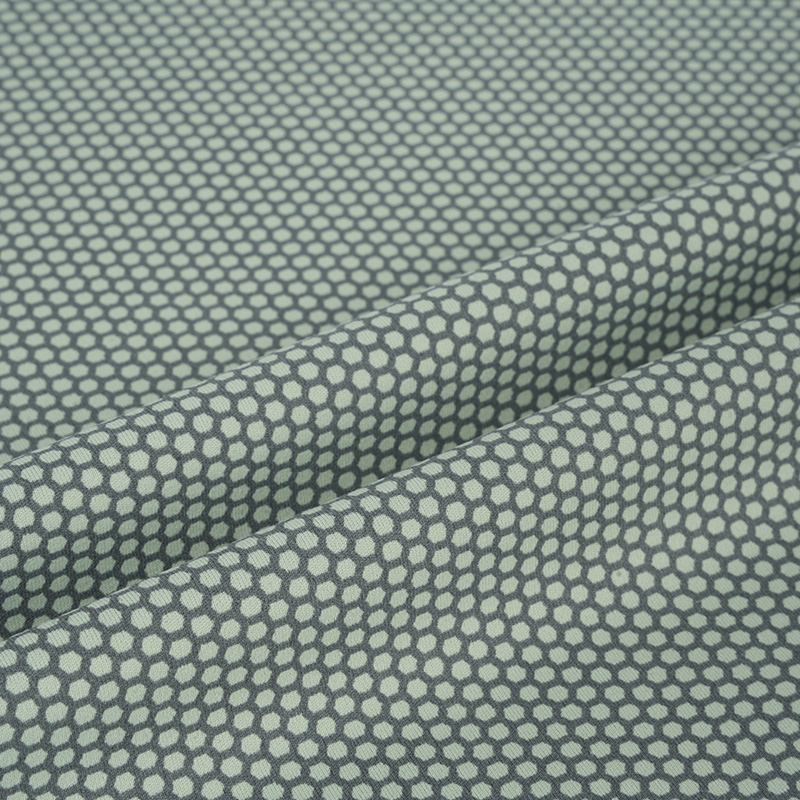
Jacquard knit activewear fabrics use patterned knitting programs to create three-dimensional surface textures — honeycomb, mesh, ribbed, and geometric patterns — directly in the fabric structure during knitting, without requiring additional printing or finishing operations. These textures serve both aesthetic and functional purposes: the raised surface of a honeycomb jacquard increases the fabric's surface area, enhancing moisture evaporation from the fabric outer surface; mesh openings in strategic areas of a compression legging provide targeted ventilation at the calf, thigh, or knee without compromising compression in other zones; ribbed textures at waistbands and cuffs provide additional compressive recovery that helps garment edges stay in place during movement. Jacquard knit fabrics command a premium over plain jersey fabrics due to their more complex knitting requirements but deliver visual differentiation and functional performance improvements that are valued in the premium activewear and yoga market.
Compression Fabric Construction
True graduated compression fabrics — as opposed to simple tight-fitting activewear fabrics that are sometimes marketed as compression garments — are engineered to deliver precisely defined pressure profiles at specific body locations, with pressure highest at the most distal point of the garment (the ankle in compression tights) and progressively decreasing toward the body's core. This graduated compression profile supports venous return, reduces muscle oscillation during high-impact activity, and may accelerate recovery from exercise-induced muscle damage. True graduated compression fabrics are produced using specialized warp knitting or circular knitting machines with precisely programmed tension variations, and must be tested for actual pressure delivery using pressure measurement devices placed at standardized anatomical locations. The distinction between genuine graduated compression garments (which require medical-grade engineering and testing) and standard "compression-style" activewear tights (which simply use a high-spandex content fabric for a tight fit) is an important one for consumers seeking therapeutic or performance-enhancing benefits from compression technology.
Fabric Finishing Technologies That Enhance Activewear Performance
The finishing stage of activewear fabric production — the series of chemical and mechanical treatments applied to the knitted gray fabric before it is cut and sewn into garments — significantly influences the final performance, aesthetics, and durability of the finished textile. Understanding the most important finishing technologies and what they contribute to fabric performance helps designers and buyers evaluate fabric specifications more critically and identify marketing claims that may overstate the actual contribution of a given finish.
- Moisture wicking finish (hydrophilic finish): Applied to polyester and nylon fabrics to enhance their moisture-spreading capability beyond what the fiber's natural capillary action provides. Hydrophilic finishing agents — typically polyethylene glycol-based compounds — are padded onto the fabric surface and cured, making the inherently hydrophobic synthetic fiber surface more water-attractive and improving the speed and evenness of moisture distribution across the fabric. This finish typically provides improved wicking for 30–50 wash cycles before it needs to be replenished, though some brands offer durable wicking finishes with 100+ wash cycle durability.
- Antimicrobial finish: Applied to activewear fabrics to inhibit the growth of odor-causing bacteria (primarily Staphylococcus epidermidis and Micrococcus species) on the fabric surface. Silver-based antimicrobial agents — including silver nanoparticles, silver zeolites, and silver-embedded yarns (such as X-Static) — are the most effective and durable options, with broad-spectrum antimicrobial activity that persists for the life of the garment when properly incorporated. Zinc pyrithione, chitosan, and quaternary ammonium compounds are alternative antimicrobial agents used in activewear finishing, with varying durability profiles. When evaluating antimicrobial finish durability claims, look for test data from AATCC 100 (antibacterial assessment) or ISO 20743 testing performed after the claimed number of wash cycles rather than on the unwashed fabric alone.
- Durable water repellency (DWR): Applied to outer-layer activewear fabrics intended for outdoor training in light rain or high humidity to cause water droplets to bead and roll off the fabric surface rather than soaking in. DWR finishes are typically fluorocarbon-based (C6 or C8 chemistry) or, in response to environmental concerns about PFAS compounds, increasingly fluorocarbon-free formulations based on silicone, wax, or dendrimer chemistry. DWR finish performance is assessed by the Spray Test (AATCC 22 or ISO 4920), with ratings of 80–100 indicating excellent initial repellency. DWR finishes require periodic reactivation by tumble drying after washing, as the heat re-spreads the finish across the fabric surface and restores its water-repelling geometry.
- UV protection finish (UPF treatment): For outdoor activewear, UV-absorbing compounds can be applied to the fabric or incorporated into the fiber to increase its Ultraviolet Protection Factor (UPF) rating — the fabric equivalent of SPF in sunscreen. Fabrics with a UPF rating of 50+ block more than 98% of UV radiation from reaching the skin beneath them, providing meaningful sun protection during outdoor training, running, cycling, and water sports. Polyester and nylon fabrics have naturally higher UV absorption than cotton, but finishing treatments can boost UPF to 50+ across a broader range of fabric weights and constructions.
Comparing the Most Popular Activewear and Yoga Fabric Blends
The majority of commercial yoga and activewear fabrics use one of a handful of well-established fiber blend ratios, each representing a specific optimization of the performance trade-offs between fiber cost, stretch, softness, moisture management, and durability. Understanding the practical differences between these standard blends helps consumers make more informed purchasing decisions and helps designers select the most appropriate fabric composition for each garment's intended use.
| Fabric Blend | Key Strengths | Limitations | Best Applications |
| 80% Nylon / 20% Spandex | Silky softness, excellent recovery, color vibrancy | Higher cost, UV sensitivity | Premium yoga leggings, studio wear |
| 87% Polyester / 13% Spandex | Fast wicking, colorfastness, low cost | Less soft than nylon, can feel clammy | Running, HIIT, outdoor training |
| 75% Nylon / 25% Spandex | High compression, strong recovery, shape retention | Less breathable due to high density | Compression tights, sports bras |
| 65% Cotton / 35% Polyester | Natural feel, affordable, comfortable for low intensity | Poor wicking, heavy when wet, limited stretch | Casual athleisure, low-intensity studio |
| Modal / Lyocell + Spandex | Ultra-soft, natural, sustainable, moisture absorbing | Slower drying, less durable, pricier | Yin yoga, loungewear, eco-conscious lines |
Washing and Care Instructions to Preserve Activewear and Yoga Fabric Performance
Activewear and yoga fabrics contain components — particularly the spandex stretch fiber and any applied fabric finishes — that degrade significantly faster than the structural nylon or polyester fibers when exposed to heat, harsh chemicals, or mechanical stress. Following appropriate care practices extends the effective performance life of activewear garments considerably, preserving their stretch, shape retention, moisture management, and antimicrobial properties through many more wash cycles than would be achieved with standard laundry practices.
- Wash in cold water (30°C maximum): Hot water degrades spandex elastic fibers and can damage applied finishes including DWR and antimicrobial treatments. Cold or lukewarm water is entirely effective for removing sweat and body oils from synthetic activewear fabrics and significantly extends garment life compared to warm or hot washing.
- Use a gentle detergent formulated for synthetic fabrics: Regular laundry detergents containing optical brighteners, bleaching agents, or high concentrations of surfactants can damage spandex and remove fabric finishes. Sport-specific detergents (such as Nikwax Tech Wash, WIN Sports Detergent, or Tide Sport) are formulated to clean activewear effectively while preserving stretch performance and applied treatments.
- Never use fabric softener: Fabric softener deposits a waxy coating on synthetic fiber surfaces that clogs the capillary structures responsible for moisture wicking, dramatically reducing the fabric's moisture management performance with each wash. This effect is cumulative and essentially permanent — a fabric softener-treated activewear garment will not recover its wicking performance through subsequent washing without the softener.
- Air dry or tumble dry on low heat only: High tumble dryer heat is the most damaging single laundry practice for spandex-containing activewear. Temperatures above 60°C cause accelerated spandex degradation, permanently reducing the fabric's stretch and recovery. Air drying at room temperature or in a dryer on the lowest heat setting preserves spandex performance most effectively.
- Wash promptly after use: Allowing sweat-saturated activewear to sit in a laundry bag or gym bag for extended periods before washing creates an acidic, chloride-rich environment that accelerates spandex degradation and can cause permanent yellowing or color shift in the fabric. Washing within 24 hours of use, or at minimum rinsing in cold water and allowing the garment to dry before storing for washing, significantly extends garment life.
- Turn garments inside out before washing: Washing activewear inside out reduces abrasion on the outer face of the fabric from the machine drum and from contact with other garments, reducing surface pilling and preserving printed or textured surface finishes. It also improves cleaning of the inner face — where body contact, sweat, and skin bacteria accumulate — by maximizing detergent and water contact with this surface.