 English
  Español
  عربى
عربى We are located in Haining City, Zhejiang Province, one of China's famous knitting industrial Bases.
Content
- 1 Why Fabric Choice Defines Performance Apparel
- 2 Activewear Fabric: Engineering for Sweat, Stretch, and Durability
- 3 Yoga Fabric: Where Compression, Softness, and Opacity Converge
- 4 Activewear and Yoga Fabric Quick-Reference Comparison
- 5 Lingerie Fabric: Balancing Aesthetics, Support, and Skin Compatibility
- 6 Lingerie Fabric Selection by Garment Type
- 7 Swimwear Fabric: The Chemistry of Chlorine, UV, and Water Resistance
- 8 Swimwear Fabric: Performance Comparison by Use Case
- 9 Cross-Category Selection Framework: Choosing the Right Fabric for Your Application
Why Fabric Choice Defines Performance Apparel
In performance and intimate apparel, fabric is not a finishing decision — it is the foundational engineering choice that determines everything from how the garment moves and breathes to how many washes it survives before losing its shape. A yoga legging made from the wrong blend pills within weeks. A swimsuit in the wrong fiber degrades after a single season in a chlorinated pool. Lingerie cut from an unsuitable mesh tears under normal wear. Getting the fabric right is the single most consequential decision in activewear, yoga, lingerie, and swimwear development.
This guide covers the four most technically demanding textile categories in apparel — activewear fabric, yoga fabric, lingerie fabric, and swimwear fabric — with specific fiber properties, blend ratios, construction considerations, and selection criteria for brands, designers, and buyers sourcing at scale.
Activewear Fabric: Engineering for Sweat, Stretch, and Durability
Activewear fabric must simultaneously manage moisture, withstand high mechanical stress from repeated body movement, resist pilling from equipment contact, and retain dimensional stability through dozens of wash cycles. No single fiber achieves all of these properties — which is why virtually all high-performance activewear is built from engineered blends rather than single-fiber constructions.
The Core Fiber Trio: Polyester, Nylon, and Elastane
Polyester is the dominant activewear base fiber globally, and for clear reasons: it is lightweight, dimensionally stable, moisture-wicking, fast-drying, and resists shrinkage and color fading through repeated laundering. Standard activewear polyester knits run between 140 and 200 GSM, with lighter weights suited to running tops and shirts and heavier constructions used for leggings and compression garments. The one well-documented limitation of polyester is odor retention — bacteria adhere readily to its smooth surface. Anti-microbial finishes, silver-ion treatments, and zinc pyrithione coatings address this but add unit cost and may diminish over wash cycles.
Nylon is softer and more abrasion-resistant than polyester, making it the preferred choice for leggings, sports bras, and any garment where skin contact comfort is a primary requirement. Its moisture-wicking and quick-drying properties are comparable to polyester, though it absorbs slightly more water by weight. The standard high-performance activewear blend — 80% nylon / 20% elastane — delivers four-way stretch, superior recovery, and a smooth, comfortable hand that has made it the benchmark for premium leggings and gym wear.
Elastane (also sold as spandex or Lycra) is never used alone but is the stretch-enabling component in virtually every activewear construction. At just 5–20% of the blend by weight, elastane enables fabrics to stretch up to five times their resting length and recover fully. The critical specification is recovery rate — a quality elastane fiber should return to within 3–5% of its original dimensions after sustained stretch, even after hundreds of wash cycles.
Sustainable Activewear Fabric Options
Recycled polyester — certified under the Global Recycled Standard (GRS) — now matches virgin polyester in performance while reducing water usage by approximately 50% and carbon emissions by up to 30% per kilogram of fabric. Bamboo viscose offers a softer, naturally odor-resistant alternative for lower-intensity garments, though it is less durable than polyester or nylon under high-abrasion conditions and pills more readily. Merino wool occupies a premium niche for cold-weather activewear: its natural temperature regulation, inherent odor resistance, and soft hand are unmatched, but it requires careful blending with synthetics to achieve acceptable durability and wash performance at scale.
Yoga Fabric: Where Compression, Softness, and Opacity Converge
Yoga fabric occupies a distinct niche within activewear — it prioritizes a different performance hierarchy than running or gym wear. The defining requirements for yoga fabric are four-way stretch with excellent recovery, opacity under forward bends and squats (a frequent point of consumer dissatisfaction with cheap leggings), soft skin-contact feel that does not distract during slow or meditative movement, and breathability during sustained static poses where body temperature elevation is moderate rather than extreme.
Nylon-Elastane: The Benchmark Blend for Yoga
The industry-standard blend for premium yoga fabric is nylon-elastane at 80/20, typically knitted at 200–240 GSM for leggings. At this weight and fiber ratio, the fabric delivers the combination of opacity, compression, softness, and recovery that yoga practitioners consistently rate highest. The higher GSM compared to standard activewear is deliberate — denser construction eliminates sheerness during deep-stretch poses, which remains the most common quality complaint about budget yoga leggings made from lighter or thinner constructions.
Four-way stretch — meaning the fabric stretches both along and across the grain — is non-negotiable for yoga applications. A fabric with stretch in only one direction restricts movement during poses that demand multi-directional extension and creates uneven compression that disrupts fit throughout a session. When evaluating a yoga fabric sample, a simple field test: stretch a 5-inch swatch in both directions and verify it returns fully within 3 seconds. Any lag in recovery is a leading indicator of premature shape loss in the finished garment.
Bamboo and Modal for Studio-Focused Yoga Wear
For restorative yoga, studio-to-street athleisure, and consumers prioritizing sustainability, bamboo viscose and modal offer a compelling alternative. Both fabrics are exceptionally soft — modal in particular has a hand comparable to silk against the skin — and both are naturally odor-resistant, reducing reliance on chemical antimicrobial finishes. The trade-off is mechanical durability: bamboo viscose pills more quickly than polyester or nylon under high-friction conditions, and modal is less resistant to abrasion. These fabrics are best positioned for tops, bralettes, and low-intensity bottoms rather than high-repetition athletic yoga where repeated mat friction occurs.
Activewear and Yoga Fabric Quick-Reference Comparison
| Fabric / Blend | Typical Composition | Moisture Wicking | Stretch & Recovery | Best For |
|---|---|---|---|---|
| Polyester-Elastane | 92% Polyester / 8% Elastane | Excellent | Good (4-way) | High-intensity gym, running, team sports |
| Nylon-Elastane | 80% Nylon / 20% Elastane | Very Good | Excellent (4-way) | Yoga, Pilates, premium leggings |
| Bamboo Viscose Blend | 95% Bamboo / 5% Elastane | Good | Moderate | Studio yoga, athleisure, sensitive skin |
| Recycled Polyester Blend | 87% rPET / 13% Elastane | Excellent | Good (4-way) | Eco-conscious activewear lines |
| Merino Wool Blend | 85% Merino / 15% Nylon | Good | Moderate | Outdoor running, cold-weather base layers |
Lingerie Fabric: Balancing Aesthetics, Support, and Skin Compatibility
Lingerie fabric operates under a completely different set of engineering requirements from activewear. Rather than optimizing for sweat management or abrasion resistance, lingerie fabrics must balance aesthetic appeal — sheerness, texture, drape, and visual detail — with intimate-wear comfort requirements including skin-gentleness, stretch in the right directions, and structural function in bra and shapewear constructions. A single lingerie garment frequently combines three or more fabric types, each performing a specific role in a very small area of construction.
The Five Core Lingerie Fabric Categories
Lace is the most iconic lingerie fabric and the most technically variable. Modern lingerie lace is almost universally machine-made, typically from nylon with elastane added for stretch. The critical quality distinction is fiber content: nylon-elastane lace delivers durability, stretch, and a smooth hand; polyester lace tends to feel stiffer, resists stretch, and deteriorates faster with repeated washing. Lace is used both as a full-body fabric for lightweight pieces and as trim or decorative overlay on bra cups, waistbands, and hem edges.
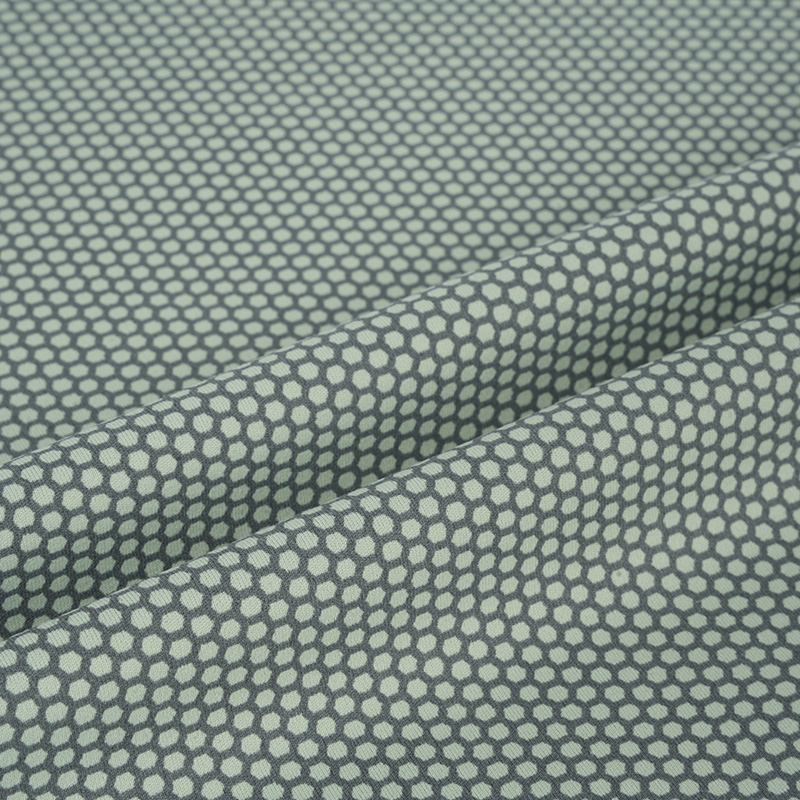
Mesh is the structural workhorse of lingerie. Hexagonal stretch mesh — typically 79% polyamide / 21% spandex — is used as bra cup lining, underwire channel support, back panel construction, and as the sheer outer layer of bodysuits and panties. Powermesh, a denser and more structured variant, provides compression for shapewear and support lining in larger bra cup sizes. The key distinction when sourcing mesh for lingerie is recovery — low-recovery mesh provides the stretch needed to dress but loses shape on the body within hours. Always verify a mesh sample's recovery across both grain directions before approving it for production.
Satin brings a smooth, lustrous surface to chemises, slips, and decorative bra panels. Lingerie satin is most commonly polyester-based rather than silk, which provides more durability, easier care, and significantly lower cost — though silk satin remains the premium-tier choice for luxury lingerie. Any satin used in a stretch application — a bralette cup or a bias-cut slip — should include elastane to prevent pulling and maintain the garment's fit under body movement.
Microfiber is the modern foundation of seamless and everyday lingerie. Made from ultra-fine synthetic fibers — typically polyester or nylon at fiber diameters of one denier or less — microfiber produces an exceptionally smooth, lightweight knit that lays flat under fitted clothing without visible texture lines. It is also moisture-wicking, making it a practical daily-wear choice. Typical microfiber lingerie constructions run from 80–130 GSM, achieving a near-invisible hand under tight outer garments.
Modal and cotton jersey serve everyday comfort and hygiene functions. Modal — a semi-synthetic fiber derived from beech tree pulp — is exceptionally soft (comparable to silk in hand feel), naturally breathable, and gentle on sensitive skin, making it the preferred choice for daily-wear knickers, bralettes, and sleepwear. Cotton jersey remains the standard for crotch gusset lining in virtually all lingerie styles, regardless of the outer fabric — 100% cotton gusset lining is a hygiene requirement, not an aesthetic choice, as synthetic gussets create unfavorable moisture and bacterial conditions in intimate contact areas.
Stretch Direction: A Critical Specification Often Overlooked
Most lingerie lace stretches in only one direction — width. If a pattern calls for stretch lace and the fabric's maximum stretch is oriented along the length of the fabric rather than across it, the resulting garment will be too small and structurally compromised. Always orient the maximum-stretch direction across the body — around the hips, ribcage, or waistband — not vertically along the body length. Jersey and microfiber typically offer two-way or four-way stretch; lace and satin often do not, and this must be verified per bolt before cutting.
Lingerie Fabric Selection by Garment Type
| Garment | Primary Fabric | Lining / Support Fabric | Key Property Required |
|---|---|---|---|
| T-shirt / everyday bra | Microfiber knit | Non-stretch tulle / powermesh | Smooth finish, shape retention |
| Lace bralette | Nylon-elastane stretch lace | 15D sheer nylon cup lining | 4-way stretch lace, sheer lining |
| Everyday panties | Cotton or modal jersey | 100% cotton gusset | Breathability, softness, hygiene |
| Bodysuit / teddy | Stretch hex mesh | Powermesh (structured zones) | Sheer, high recovery, body-conforming |
| Slip / chemise | Satin (polyester or silk) | — | Smooth drape, skin-contact comfort |
| Shapewear | Powermesh + microfiber | Powermesh (compression zones) | High compression, shape retention |
Swimwear Fabric: The Chemistry of Chlorine, UV, and Water Resistance
Swimwear fabric operates in the most chemically aggressive environment of any apparel category. Chlorinated pool water oxidizes synthetic fibers, degrades elastane, and causes irreversible color fading. Saltwater draws moisture from fiber structures. UV radiation breaks down polymer chains over time. A swimsuit that performs excellently in a single season of recreational beach use may fail within weeks under the conditions of competitive swim training. Understanding the chemistry behind each fiber's water and chemical resistance is essential for specifying swimwear fabric correctly.
Polyester-Spandex: The Chlorine-Resistant Standard
Polyester is the dominant fiber in performance and training swimwear because of its unmatched chemical stability in chlorinated water. The benzene ring in polyester's molecular structure naturally absorbs UV radiation — giving untreated polyester an inherent UPF rating of approximately UPF 15, upgradeable to UPF 50+ through tight knit construction and UV-absorbing additives. In chlorine resistance, polyester outperforms all alternatives: swimsuits made with 100% polyester last 3–4 times longer in chlorinated water than those made with standard spandex blends, with quality polyester swimwear rated to withstand up to 600 hours of chlorine exposure without significant degradation.
The standard performance blend is 75–90% polyester combined with 10–25% spandex. This ratio delivers the chemical durability of polyester with sufficient elasticity for a comfortable, body-conforming fit. Modern engineering has substantially improved polyester's hand feel — premium polyester swimwear knits are now smooth, soft, and four-way stretch, eliminating the stiffness associated with earlier polyester constructions.
PBT-Polyester Blends: Maximum Chlorine Endurance
For competitive swimmers and lifeguards who require the longest possible garment lifespan, PBT (polybutylene terephthalate) polyester blends represent the current performance ceiling. PBT fibers can be textured to impart natural two-way stretch without requiring high spandex content, which means less chlorine-vulnerable elastane in the construction. PBT-polyester blends have been tested to withstand over 300 hours in harsh chlorinated conditions — surpassing standard polyester-spandex blends — while retaining shape, color, and structural integrity. The trade-off is a slightly firmer hand and less range of stretch than spandex-rich constructions.
Nylon-Spandex: Softness First, with Conditions
Nylon-spandex blends dominate fashion swimwear and recreational beach use, where the priority is softness, vibrant coloration, and comfortable fit rather than extended chlorine exposure. Nylon delivers exceptional stretch and recovery, a silkier hand than polyester, and — with UV treatments and tight knit constructions — can achieve UPF 50+ ratings. Its limitation is chlorine stability: untreated nylon degrades faster in pool water than polyester, losing elasticity and fading more quickly with regular use. Nylon swimwear is best suited for occasional pool use, beach and ocean swimming, and fashion-forward styles where aesthetic priority outweighs durability requirements.
Chlorine-Resistant Elastane: Protecting the Stretch Component
Standard elastane is the weakest link in any swimwear construction when it comes to chlorine exposure — pool chemicals break down standard spandex fibers, causing the suit to lose shape and elasticity progressively. Chlorine-resistant elastane variants — chemically modified to strengthen the fiber's resistance to oxidative degradation — dramatically extend garment lifespan in training environments. When sourcing swimwear fabric for competitive or high-frequency swim use, specifying chlorine-resistant elastane as a requirement alongside the base fiber is essential, not optional.
Swimwear Fabric: Performance Comparison by Use Case
| Fabric Type | Chlorine Resistance | UV Protection (inherent) | Softness | Best Use Case |
|---|---|---|---|---|
| Polyester-Spandex | Five Stars (up to 600 hrs) | UPF 15 base / 50+ treated | Good | Training, competitive, recreational |
| PBT-Polyester Blend | Five Stars (300+ hrs tested) | UPF 50+ (tight knit) | Moderate | Competitive training, lifeguard use |
| Nylon-Spandex | Three Stars (moderate) | UPF 5 base / 50+ treated | Excellent | Fashion swimwear, beach, occasional pool |
| Recycled Polyester-Spandex | Five Stars (matches virgin) | UPF 50+ (treated) | Good | Eco-conscious performance swimwear |
| Neoprene | Four Stars (salt/cold water) | Variable | Moderate | Cold water, wetsuits, thermal protection |
Cross-Category Selection Framework: Choosing the Right Fabric for Your Application
The four fabric categories covered in this guide — activewear fabric, yoga fabric, lingerie fabric, and swimwear fabric — share a common foundation of stretch-fiber engineering but diverge sharply in their performance priority hierarchies. The following framework summarizes the decision logic for each category:
- Activewear: Lead with moisture management and abrasion resistance. Polyester-elastane for cost-effective high-intensity performance; nylon-elastane for premium softness and athletic leggings. Always verify the anti-odor treatment and its wash durability for synthetic constructions.
- Yoga: Lead with opacity, recovery speed, and four-way stretch. Weight should be at minimum 200 GSM for leggings. Test recovery rate and squat-opacity with every new fabric before approval — these are the two most common consumer complaint triggers in this category.
- Lingerie: Match fabric to the specific structural role it performs in the garment. Never use a single fabric specification across an entire collection — a lace bralette, an everyday panty, and a shaping brief each require a completely different fabric approach. Stretch direction, weight between 170–200 GSM for jersey, and 100% cotton gusset lining are non-negotiable quality foundations.
- Swimwear: Start with end-use environment. Pool training demands polyester-spandex or PBT blends with chlorine-resistant elastane. Ocean and beach recreation opens the door to nylon-spandex for better hand feel. Always verify UPF rating at the treated level, not the inherent fiber rating. Specify polyester thread for all seams — cotton thread degrades rapidly under chlorine and UV, creating seam failure independently of the face fabric quality.
Across all four categories, the consistent principle is the same: no fabric specification should be finalized without physical swatch testing under the garment's actual use conditions — whether that means washing a yoga legging 30 times before approving it, stretch-testing a lingerie lace in both directions, or soaking a swimwear sample in chlorinated water to simulate a month of pool training. The fabric performance you measure in a sample is the performance your customers will experience at the end of a season.