 English
  Español
  عربى
عربى We are located in Haining City, Zhejiang Province, one of China's famous knitting industrial Bases.
Content
- 1 Structural Differences Between Jersey Fabric and Woven Fabrics
- 2 Fabric Flexibility and Elastic Behavior
- 3 Surface Texture and Drape Characteristics
- 4 Breathability and Comfort Performance
- 5 Durability and Shape Retention
- 6 Manufacturing and Cutting Considerations
- 7 Typical End-Use Applications
- 8 Comparison of Key Structural and Use Attributes
- 9 Choosing Between Jersey and Woven Fabrics
Structural Differences Between Jersey Fabric and Woven Fabrics
The fundamental difference between jersey fabric and woven fabrics lies in how the yarns are constructed. Jersey fabric is a type of knitted fabric formed by interlooping yarns, usually in a single continuous direction. This loop-based structure allows the fabric to stretch naturally, even without the addition of elastic fibers.
Woven fabrics are produced by interlacing two sets of yarns, warp and weft, at right angles. This crisscross structure creates a more stable and fixed textile, where stretch is limited unless specific weave patterns or elastic fibers are introduced.
Fabric Flexibility and Elastic Behavior
Jersey fabric exhibits inherent elasticity due to its knitted loop construction. This stretch allows garments to adapt to body movement, making jersey suitable for close-fitting and flexible apparel. The recovery ability of jersey fabric depends on fiber composition and knit density.
Woven fabrics generally show minimal natural stretch. Their dimensional stability makes them suitable for garments and products that require defined shape retention. Any elasticity in woven textiles usually comes from mechanical weaving techniques or blended fibers rather than structural flexibility.
Surface Texture and Drape Characteristics
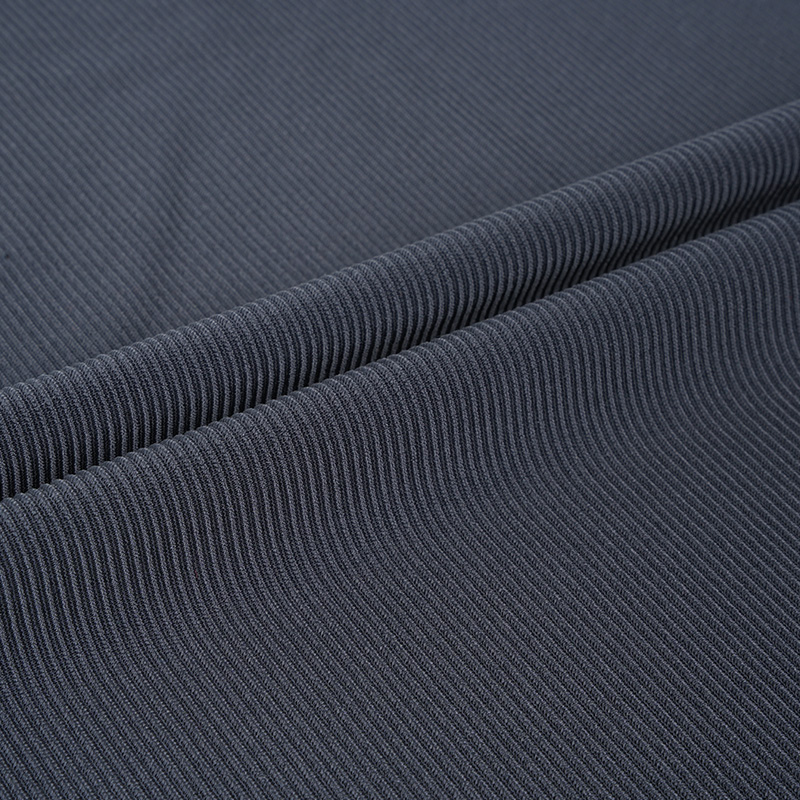
The looped surface of jersey fabric results in a softer hand feel and fluid drape. Jersey tends to follow body contours smoothly, which influences its use in casual wear and garments that prioritize comfort and movement.
Woven fabrics typically present a more structured surface. Depending on the weave type, such as plain, twill, or satin, the fabric may feel crisp, firm, or smooth. This structure supports tailored silhouettes and clean garment lines.
Breathability and Comfort Performance
Jersey fabric often provides good air permeability because of its looped construction, which creates micro spaces within the fabric. This characteristic supports moisture movement and thermal comfort, particularly in garments worn close to the skin.
Woven fabrics vary widely in breathability based on yarn density and weave structure. Lightweight weaves allow airflow, while tightly woven textiles prioritize durability and protection over ventilation.
Durability and Shape Retention
Jersey fabric can be more prone to deformation over time, especially under repeated stretching and washing. Edge curling and dimensional change may occur if the knit structure is loose or unsupported by finishing processes.
Woven fabrics generally offer stronger resistance to distortion. Their interlaced yarn structure helps maintain original dimensions, making them suitable for garments and products that require consistent sizing and long-term shape stability.
Manufacturing and Cutting Considerations
From a production perspective, jersey fabric requires careful handling during cutting and sewing due to its stretch and tendency to shift. Pattern design often accounts for negative ease to achieve the desired garment fit.
Woven fabrics offer greater control during cutting and assembly. Their stability simplifies pattern alignment and seam construction, which is especially important for structured garments and precision tailoring.
Typical End-Use Applications
The structural differences between jersey and woven fabrics directly influence their application choices across apparel and textile products.
- Jersey fabric is commonly used for T-shirts, activewear, underwear, and casual garments
- Woven fabrics are widely used for shirts, trousers, outerwear, and formal apparel
Comparison of Key Structural and Use Attributes
| Attribute | Jersey Fabric | Woven Fabrics |
| Structure | Knitted loops | Interlaced warp and weft |
| Stretch | Natural elasticity | Limited without elastic fibers |
| Drape | Soft and fluid | Structured and stable |
| Typical Use | Casual and stretch garments | Tailored and structured products |
Choosing Between Jersey and Woven Fabrics
Selecting between jersey fabric and woven fabrics depends on functional requirements rather than preference alone. Fit flexibility, garment structure, wear conditions, and production methods all influence material choice.
Understanding these structural and use differences allows designers, manufacturers, and buyers to align fabric selection with performance expectations and end-use demands.